NeverEnding Story |
 |
NeverEnding Story |
|
|
Görden, Michael: The World of The Neverending Story: Bilder für den Film, Lübbe-Verlag, Bergisch-Gladbach, 1984, ISBN 3-7857-0385-6., 128 Seiten.
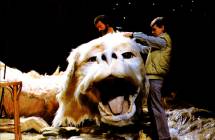
This wonderful book fills the space between Michael Endes original novel and the movie. With its phantastic images of fascinating landscapes of Phantasia und the strange figures of this land and with its photographs from the movie the way from the finding of ideas to the realization in moving pictures is shown. During the reading we see the work of the many artists that brought the giant success of the movie.
 What seemed impossible to realize first, the designing of the various landscapes of
Phantasia, that succeed the great artist Ul de Rico. He
generated the base for the design of the settings and creatures of Phantasia with
his ideas. We find in the first chapter pictures of the Mountains of the Glassy
Towers, the Mountains of Lonelyness, the village of the Grassy people, the
Hauling Forest and other towns and landscapes. The similarity between the picture
models and the real stage-design is astonishing. By Ul de Ricos hand also the
scetches for the Rock biter, the Morla and the Gmork come from.
What seemed impossible to realize first, the designing of the various landscapes of
Phantasia, that succeed the great artist Ul de Rico. He
generated the base for the design of the settings and creatures of Phantasia with
his ideas. We find in the first chapter pictures of the Mountains of the Glassy
Towers, the Mountains of Lonelyness, the village of the Grassy people, the
Hauling Forest and other towns and landscapes. The similarity between the picture
models and the real stage-design is astonishing. By Ul de Ricos hand also the
scetches for the Rock biter, the Morla and the Gmork come from.
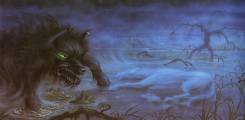 The bodyless all destroying Nothing and his servant the Gmork had a very special
importance and difficulties of the same size for the (movie) artist. While the
Gmork as werewolf has many examples in the history of film, the Nothing should
be transformed strongly from his origin in Michael Ende book. So it lost the
ideas of the author but it became more thrilling and more dramaticly. However,
we found the dispair of the nothing at an other part of the film. These are the
Swamps of Sadness which were very impressing realized. The detail rich design
pictures we owe Ul de Rico and Juan Japl (an example in
the picture at right).
The bodyless all destroying Nothing and his servant the Gmork had a very special
importance and difficulties of the same size for the (movie) artist. While the
Gmork as werewolf has many examples in the history of film, the Nothing should
be transformed strongly from his origin in Michael Ende book. So it lost the
ideas of the author but it became more thrilling and more dramaticly. However,
we found the dispair of the nothing at an other part of the film. These are the
Swamps of Sadness which were very impressing realized. The detail rich design
pictures we owe Ul de Rico and Juan Japl (an example in
the picture at right).
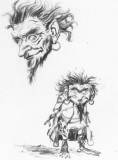 A big chapter of the book is dedicated to the main task of Juan Japls, the
realizing of the many phantastic creatures and the story boards. You see that
it isn't easy to invent creatures and fix them at paper. In this book it is
explaint why only the opimal mixing between exotic ideas and reality (for
the imagination of the creatures with their special faces and characters)
brought the great success. And the book shows which great work contains
the storyboards.
A big chapter of the book is dedicated to the main task of Juan Japls, the
realizing of the many phantastic creatures and the story boards. You see that
it isn't easy to invent creatures and fix them at paper. In this book it is
explaint why only the opimal mixing between exotic ideas and reality (for
the imagination of the creatures with their special faces and characters)
brought the great success. And the book shows which great work contains
the storyboards.
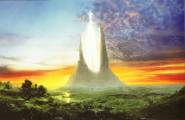 About the center of Phantasia is a lot to tell because it is not only the
geographical, political and cultural center but also the realization of many
profond ideas of Michael Ende. Like in whole Phantasia we find here many
comparision with the real world. This book showed me that you can discover
new view points of Phantasia with every reading of the original novel.
About the center of Phantasia is a lot to tell because it is not only the
geographical, political and cultural center but also the realization of many
profond ideas of Michael Ende. Like in whole Phantasia we find here many
comparision with the real world. This book showed me that you can discover
new view points of Phantasia with every reading of the original novel.
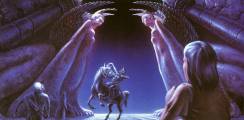 The fifth chapter about heroa and rescuers deals with the kernel of the story.
We get to know why this story stands out agains other fantasy stories and films
in a freshing manner. The joung hero has not to learn to fight at his long way
but courage, wisdom and understanding. And not he will become the rescuer. The
rescuer is attracted by the thrilling story, like the spectator or reader.
With this idea Michael Ende reach his goal th write a story that not becomes
boring at any time because it is directed to the reader or spectator.
The fifth chapter about heroa and rescuers deals with the kernel of the story.
We get to know why this story stands out agains other fantasy stories and films
in a freshing manner. The joung hero has not to learn to fight at his long way
but courage, wisdom and understanding. And not he will become the rescuer. The
rescuer is attracted by the thrilling story, like the spectator or reader.
With this idea Michael Ende reach his goal th write a story that not becomes
boring at any time because it is directed to the reader or spectator.
The realizing of the many ideas painted designs and special effects through the engineers is descibed at the end of this book. We get a view into the production rooms of the technicians. The question how the fascinating effects are produced in quite simple ways enthuse me again at every good movie.

 Literature